Every biotech company wants advertising that works. It means investors who understand the opportunity, partners who reach out, and customers who already know why you matter.
The good news is that it’s achievable. The less obvious news is that biotech advertising succeeds for very different reasons than advertising in most other industries, and the things that make a campaign look successful are often not the things that make it successful.
What success actually looks like in biotech
In consumer markets, success is often about scale: more views, more clicks, more sign-ups. In life sciences, it looks quite different.
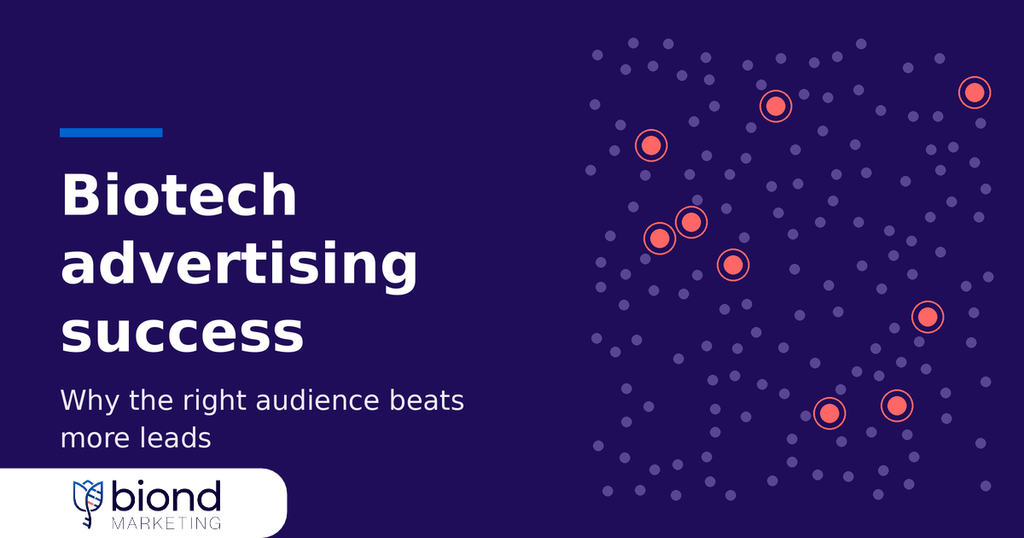
- A small, well-chosen audience. The people who can buy, partner with or invest in you may number in the hundreds. Success means reaching them, not everyone else.
- Understanding that earns respect. Scientists, clinicians and investors recognize vague or exaggerated claims immediately. Success means a message that holds up to expert scrutiny.
- Conversations that matter. A handful of meetings with the right people can shape a company’s future. Hundreds of irrelevant enquiries can’t.
- Patience built in. Decisions in this industry take months or years. Success means being remembered when the time comes.
That’s a very different target from “more leads,” and it changes how everything should be planned.
Why more leads isn’t the same as more success
Leads are easy to count, which is why they’re so often treated as the goal. But a high number can hide a poor result. If most enquiries come from people who can’t buy, can’t partner and can’t invest, the campaign has produced activity, not progress.
Every irrelevant lead has a cost. There’s the budget used to attract it, the time spent sorting it, and the lost focus when your team chases opportunities that were never real. These costs rarely appear in a campaign report, but they add up quickly.
The question that matters is not “how many people did we reach?” but “did the right people understand what we do, and did any of them want to talk to us?” This is the thinking behind biotech lead generation that’s built for quality instead of volume.
4 places biotech advertising budgets are most often wasted
Most wasted spend doesn’t come from the campaign itself. It comes from decisions made before it begins. Here are four of the most common.
1. Advertising before the message is clear
If your positioning isn’t sharp, advertising spreads confusion to more people, faster. Spending to reach an audience with a message they can’t follow is one of the most expensive ways to learn that the message needs work. Getting your biotech positioning and messaging right first often saves more than any campaign adjustment later.
2. Aiming at the wrong audience
“Researchers” or “healthcare providers” is not a target. The specific roles that influence a decision, and what each of them needs to hear, are. Gartner research suggests the typical buying group for a complex B2B purchase involves six to ten stakeholders, each with their own questions. Without that clarity, even a well-run campaign reaches people who will never act.
3. Measuring the wrong things
When success is defined by volume, a campaign can look excellent while delivering nothing useful. Measuring qualified conversations, meaningful enquiries and genuine interest takes more care, but it’s the only measurement that matches the business goal.
4. Making claims that damage trust
In life sciences, credibility is part of the product. An overpromise, an unsupported claim or a message that ignores regulatory realities can undermine trust with an audience small enough to talk among themselves. That damage is far costlier than the campaign budget.
Regulators are clear about where responsibility sits. In Singapore, for example, the Health Sciences Authority states that it is the advertiser’s responsibility to make sure medical device advertisements and promotions comply with the legislation and guidelines. Beyond regulation, the research behind the Stanford Guidelines for Web Credibility shows how much small signals of credibility shape whether people trust an organization at all. Rules differ by market and product type, which is one more reason to get specialist input early.
Why specialists make the difference
Advertising skills are only part of the picture. Biotech advertising also needs an understanding of the science, the buyers and the boundaries, and those come from experience in the sector.
A specialist helps in ways that directly protect your budget:
- They ask the right questions first. Who exactly needs to be reached, what do they need to believe, and what would a good outcome look like?
- They translate without distorting. They can make complex science clear without making it wrong.
- They know where the lines are. They understand what can and can’t be claimed, and avoid risks before they become problems.
- They tie activity to outcomes. They set up measurement around what the business actually needs, and tell you honestly when a number looks good but means little.
- They know when not to advertise yet. Sometimes the most cost-effective advice is to fix the foundations first, and a specialist will say so.
The value of that last point is easy to overlook. A good specialist can save you money simply by stopping spend that wouldn’t have worked.
Success starts before the first advert
Advertising in biotech works when it sits on top of clear positioning, a well-defined audience and realistic goals. When those foundations are in place, it can be a powerful way to build awareness, credibility and conversations. When they aren’t, it becomes an expensive way to find out what should have been settled earlier.
The companies that get the most from advertising tend to be the ones that spent time on the questions first: who do we need to reach, and what do we need them to understand?
Key takeaways
- Successful biotech advertising reaches the right few people, not the most people.
- Success is measured in qualified conversations, not clicks or lead counts.
- The biggest costs come from decisions made before a campaign launches: the wrong audience, the wrong message, the wrong goal.
- Specialists who understand the science, the buyers and the rules help you avoid those costs early.
Want to make your advertising work harder?
At Biond Marketing, we work with biotech, medtech and life science companies to build marketing that reaches the right people and avoids unnecessary spend. If you’d like to talk through whether advertising is the right next step, explore our services or get in touch. Our biotech marketing strategy work is a good place to start.